Friday, November 12, 2010

Vagrant Story - Matsuno's Phantom Pain


Ever since I found out that Ridley Scott wanted to end Alien with Ellen Ripley being eaten by the Alien and then having the Alien deliver the closing monologue in Sigourney Weaver's voice, I've wondered who I have to thank for all of the good ideas and who to blame for all the bad ideas in any given work.

After creating the Ogre Battle series with Quest, Yasumi Matsuno teamed up with Square to make Final Fantasy Tactics, finally giving birth to the fictional world he had been nursing in his imagination for some years: Ivalice.

Tactics' story was intriguing in ways that not even those who enjoyed would grasp immediately. Tactics was a biography - not just an objective history lesson, but a tale ("The Zodiac Brave Story") from one angle among many possible depictions of a single event (The War of the Lions). Tactics, even with all its convolutions, is a focused story. There aren't any mini-games that involve adding numbers or sequences where your party forms an impromptu rock band. It's all about war, faith and the limits of loyalty.

Upon Tactics' success, I imagine a thought must have occurred to Matsuno. What if Ivalice was a place that could be explored from a variety of angles? Not just from various points in its history, but through various genres as well? That's when Matsuno and his bros in aesthetic sensibility - music composer Hitoshi Sakimoto and character designer Akihiko Yoshida - set to work on Vagrant Story.

Two particular games would be released after Tactics: Parasite Eve and Metal Gear Solid. Both would inspire Vagrant Story's concept of a one-man army going on an infiltration mission to cease the ridiculous machinations of a villain with whom the hero shares an undisclosed connection. Indeed, the relationship between Ashley Riot and Sydney Losstarot is directly comparable to that between Parasite Eve's Aya Brea and Eve, which, to be fair, is nearly identical to that between Final Fantasy VII's Cloud Strife and Sephiroth, which was copped from Berserk's Guts and Griffith, who, really, might just be Jim Hawkins and Long John Silver from Treasure Island.

Vagrant Story would also apply Metal Gear Solid's deft production budgeting to Parasite Eve's concept of a "Cinematic RPG". The design team traveled to Bordeaux, France to inspire their complex virtual sets, and constructed the most expressive character models of the generation, and all would look impressive from every angle. Matsuno and gang would pass on including voice acting, since Square's experience was mostly limited to Brave Fencer Musashi and some of Ehrgeiz, instead conveying dialog through comic book-style speech bubbles.


I do sometimes wish that Sydney started singing "Out There" after crashing through the window.

All these tools would be used to compose the mostly tightly-directed cut scenes of the day to tell one of the most tightly written stories in video games. Even the speech bubbles would be figured into the composition of each shot. This brand of direction would go largely ignored by Japanese RPG developers, who were prefectly content with having camera slowly hover through cut scenes at eye-level from one glass-eyed static character model to the other, despite the fact that video game cameras don't have physical mass and can be moved literally ANYWHERE to achieve marginally more interesting results.

The truth is that Vagrant Story's story isn't even made up of very original components. An invisible evil force, amnesia, corrupt churches and corrupt states, silly hair styles - those motifs alone have been around since the first Breath of Fire. Like Tactics, Vagrant Story is one facet of a gem in Ivalice's history. This focus, putting some facts center stage while obscuring others, introduces an element of mystery that somehow makes everything more dire. Characters with simply stated motives seem to carry a depth suggested in their actions that we never quite fully see. Paradoxically, thanks to our imaginations, that minimalism is imbued with weight, realism, a kind of maturity not often seen in video games, save for maybe Silent Hill, Braid, possibly even Hotel Dusk. What I'm saying is Vagrant Story isn't supposed to be a kitchen sink RPG where you mourn your friend's death by going snowboarding. Vagrant Story is serious business.

Which brings me to the main problem with Vagrant Story as a video game - consistency.

In such a laser-focused narrative - in a game where the last dungeon includes a cut scene in which the exposure of a new fact that is integral to understanding what happens is limited to one single sentence delivered with impeccable timing, why are there there four puzzles that involve pushing boxes into holes?

You might think I am suggesting that Yasumi Matsuno is like Tim Schaefer, a designer who comes up with fantastic ideas but fails to actually have really fun video games made out of them. That is not true. Aside from the box-pushing puzzles, Vagrant Story features a beautifully intricate series of game mechanics. The problem is that

1) it's not finished, and
2) it doesn't belong with this story.


The first time I played Vagrant Story, I believed that a weapon's efficiency against a target was based on the target's "Class" - human, beast, dragon, undead, etc - and that training weapons to be more effective against those classes would help me deal more damage to them. This knowledge was supported by the player's manual and the fact that when examining a weapon the first thing you see is its efficiency against all of the enemy classes.

HOWEVER the Internet taught that a weapon's Class efficiency is a negligible factor in damaging enemies compared to its Elemental affinity and its type - and that, on top of attack and defense power, all of these factors work together to decide how badly you damage the enemy. I didn't fully understand this concept until my third play through the game 10 years later. If someone had just explained it to me as laying my weapon's affinities on top of the enemy's affinities like two rear projector sheets, everything would've been so easy.

But it's not just that the game tricks you into thinking you know how to play it - it still makes you think that you don't, even when you do.

Let's take the final boss as an example of how the combat system is amazing and retarded all at once. It is un-analyzable, meaning I can't check its defenses, and all of my weapons did zero damage to it, so I couldn't even really guess which angle I was supposed to attack from. What I discovered online is that ALL of its elemental defenses were astronomical. This meant no one element was more effective than the other, which in turn meant that none of them were the wrong one to use against it. Upon a single play through the game, of all the stat-boosting gems you collect that you can use to bolster your weapons strengths, you get the most wind-damage gems. So I loaded those all into my weapon with the highest innate wind affinity and went to town.

What's amazing about this is that I realized, technically, there is no "wrong" way to attack an enemy, that you can turn the tables with the right know-how. What's retarded about this, in actuality, is that if you can't figure out the "right" way quick enough, fights take forever, and the game does very little to help you.

My belief is that all of the little subsystems in the game - the stat-boosting gems, the ability to combine weapons to create new ones, rearranging blades and grips, the magic spells that boost certain elemental affinities - weren't just created to give the player a sense of control, but to keep the programmers from having to balance the difficulty themselves. It's like one of those "brew your own root beer" kits. It's a cool idea, and when it actually works you feel accomplished, but then you're just like: "Why didn't the guys who made this kit just make some root beer? It probably would've tasted better than what I made."

Even if Ashley's arsenal involves more statistics to keep track of than your entire army in Final Fantasy Tactics, the weapons system is fascinating - the kind of deep number massaging that nerds can really sink their teeth into, not unlike how the junction system in Final Fantasy VIII makes an otherwise challenging game more fun. Only change "challenging" to "incomplete" and "fun" to "playable".

But even then - even if you excuse the obtuse combat system and the weird "sure, that works" difficulty - the final nail in the coffin is ergonomics. Even with a "quick menu" to manage all of the options at Ashley's disposal, a walk through a single room can be prolonged by trial and error attacks to see if the enemy's weak against your weapon, going to the inventory to switch your weapon with a new one, attacking again, find that it still doesn't work, casting Analyze, going to the status menu to view the results, going to attach the appropriate gems to your weapon, not finding the gems, remembering that the gems are in a shield that you're not using, removing the gems, confirming the removal, attaching the gems, confirming the attachment, and the finally killing the enemy that didn't even really have that much HP left after all, and then switching back to your other weapon to fight other, different enemies.

It's a wonder why there isn't a WEAPONS or GEMS option in the quick menu, considering it's changing those things that eat up the most time. It's especially frustrating that there are instead options to access BREAK ARTS, which are mostly useless, and both CHAIN and DEFENSE abilities, which I rarely change.

If I had to remake Vagrant Story, I'd trim all of the fat and focus the entire combat system on your Chain Abilities - the various means by which Ashley actually inflicts damage, based on Super Mario RPG-style timed button presses - and management of your RISK - a gauge which fills as you perform more consecutive Chain Abilities, increasing the damage you take and the chances that you'll whiff. These two simple tenets, rewarding technical skill and punishing risky behavior, have been the foundation of making video games fun for as long as they've been around. Besides that, chain abilities and Risk are about the only parts of the gameplay that are directly tied to Ashley's character. I'd probably have to cut the blacksmithing, too - sure you wouldn't be able to make that Perfect Romaphaia 'Holy Win' Sword, but Ashely really shouldn't be dicking around like that anyway, he's on a mission!


All of this musing on what could have been just make me wonder again, who is to thank and who is to blame? Did Matsuno make all of these decisions, thinking they'd mesh perfectly? Did he have different ideas, but think the public would prefer these? Or did he kowtow to meddling from higher-ups?

We know that some things didn't go as planned. Early on, he thought the game might have included AI controlled partners, or even a second player, and then 50 percent of the "scenario" had to be cut - whether that means playable areas, written story or both, we'll never know. For all we know that 50 percent could have come out of the script, leading to the tight and exposition-dry version we've come to know and love. Maybe there was going to be a tutorial that actually taught you how to play the game. This information, along with troubles that would occur years later during Final Fantasy XII forcing Matsuno to "get sick" and step down from the helm, suggests that meddling and budget mishaps - indeed, Vagrant Story was part of the Summer of Adventure in America, a deluge of Square titles also including Parasite Eve 2, Legend of Mana, Threads of Fate and Chrono Cross - may have caused the incongruity between Vagrant Story's narrative and gameplay.

It is also possible that, after Tactics, Matsuno would be expected to produce a game with lots of numbers of changeable variables that players could fuck around with for hours and multiple playthroughs - and, with a history in strategy RPGs, he isn't a stranger to that sort of thing. So it's also possible that Matsuno created a story with such spectacular aesthetic sensibilities and consistency - including an incredibly human cast of saints and sinners and a score both hauntingly ambient and bombastically soaring - and then he attached a really fucking complicated game to it on purpose.

Why would he do this, aside from having stuff that happens while time passes between cut scenes? And why do I care so much?

Think about all of the RPGs you've played - not just the long and good ones like Earthbound, but even the ones you haven't liked that much, like, say, Crisis Core. All the people you meet, all of the monsters you defeat, all of the trials and bullshit you go through - you carry so much with you the whole way. It's like life. You can start to hate it, almost. But there's something about finishing a game of that length that is so important, exactly because it took so long and you worked so hard. You come out of the darkness and into the light, and its by that light that you can see all you've done.

Without going into too much detail, Vagrant Story is exactly like that, and at the same time nothing like that. You and Ashley goes through so much shit - so much fucking shit, shit beyond the both of you - and you're the only two capable of taking it, and you get out into the light and you wonder... Was it worth it? Who did we do it for? Would we have been happier if we hadn't?

Am I suggesting that Matsuno meant all of the frustration and confusion of the player to parallel that of his hero, and possibly himself? No. But that doesn't mean it didn't.


P.S. If you're trying to show off the game to your friends, use completed game data. You'll look like less of a schmuck.

P.P.S. The man who wrote the Brady Games Official Strategy Guide for Vagrant Story was Dan Birlew, AKA President Evil, who wrote the first ever Silent Hill plot analysis that I mentioned. That guy's gonna be connected to a lot of games that made me feel particular ways.

Tuesday, October 26, 2010

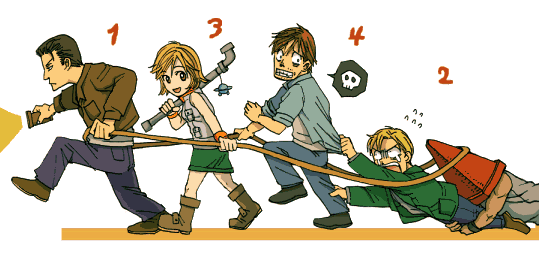
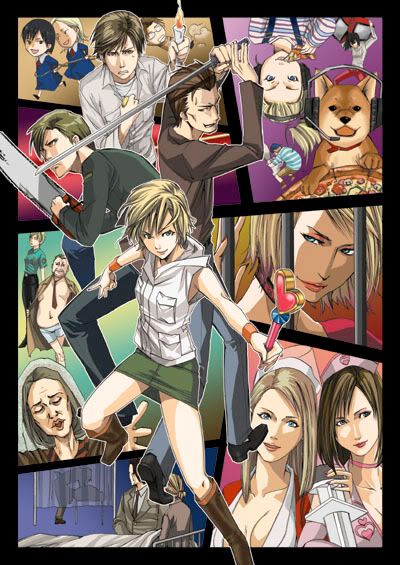
Silent Hill 3 and 4: Things Get Worse


In all of the Silent Hill games, the player's goal is usually clear. In the first game, Harry Mason has to find his daughter Cheryl. What ISN'T clear are the circumstances that guide Harry toward his eventual success or failure. The game reaches Lynchian levels of confusion.

The first ever plot analysis for Silent Hill (or the first one to be distributed) was written by Dan Birlew, AKA President Evil. It processed all of the visual and contextual clues from the game to reach almost satisfying conclusions for the mysterious motivations for the characters and explanations for the heady, symbolist endings.


Reading it felt like playing the game all over again, and was a really intense experience for me. None of it was canon, but it made perfect sense logically and emotionally. I felt rewarded. The game must have been vague exactly so that the people who were enthralled by it could seek their own answers. As someone who hadn't even started high school yet, Team Silent and Mr. Birlew gave me my first real exposure to critical writing, analytical thought and semiotics. For this reason, Silent Hill - like Ren and Stimpy, Evangelion and The Simpsons - taught me much about living, and would become a permanent part of my psyche.

Silent Hill 2 would only raise the stakes, as the development team discovered how to tell a psychological and emotional story without being confounding about it. Upon completing it I was scared at night for days, just like last time, but I was sad too.


I said that the goal in Silent Hill is usually clear - in both games, the hero is to save their loved one. It's true, the mission doesn't really change, but everything else changes around it. As details come to light, as the world grows more and more oppressive, the road grows darker, the protagonist must eventually ask: "Do I really love her?" I didn't know it until now, but at that point in time, Silent Hill was a series about love. Even when it wasn't specifically romantic or familial love, it was about the intense passions of every character, not just the hero. The games were passionate.


Silent Hill 3 explained and confirmed the story of Silent Hill 1, permanently altering the nature of the series. To be fair, they handled it surprisingly well. In the end, it didn't really bother me at all that the character I was playing as was the reincarnation of a girl who was once simultaneously another, different girl.

In fact, Heather's character is the best thing I can say about Silent Hill 3, not only because linking her directly to the events of the first game is a smart way to bestow on her the responsibility of dealing with whatever new evil, she's also totally different from our previous two protagonists. She's gutsier, irreverent, more like the player controlling her. She challenges the horrors of Silent Hill by trying to remain unfazed - so when she DOES get scared and show some vulnerability, you know shit is getting real. Though it's also funny when Silent Hill becomes the OTHER Silent Hill she's just like, "Oh, hell."


The game also has the same quality of fantastic set pieces the first two games are known for, my personal favorite being the mirror in the hospital which shows a tainted reflection of the room that slowly seeps into the room itself, killing Heather. It's just full of the same wonderful visual ideas we've come to love, like the love letters to Heather that disappear when you return to their locations, suggesting that they're being moved around by their writer.

The main problem, like I said, is that it's a sequel to the original. Sure, then they were able to make references to the first game - some of them being very cool, like Harry's save-point/notepad scribblings in the amusement park, Cheryl's sketchbook, the confession event towards the end of the game - but that also means having to explain the events of the first game.


It just baffles me how these guys missed one of the most important tenets of horror: what you don't show is just as scary as what you do show. Before Silent Hill 3, you had to guess why everything was so screwed up. Are the people in the town evil? Is the town itself evil? Is everything a projection of your evil thoughts?

One very interesting and scary idea is that the game opens OUTSIDE of Silent Hill, and yet things are STILL fucked up. The explanation for this is Claudia, presumably one of the last members of the cult in Silent Hill trying to revive their old god, who coaxes Heather into following her to Silent Hill. It's bizarre, seeing our hero choose voluntary go there rather than being drawn in. This allows for a cut scene that is both excellent and infuriating. The darkness, the rain, the melancholy-ass music, the voice acting which actually makes Douglas' seem decent - it's such a tightly directed scene, unlike any other in the series. Unfortunately, it also includes the infamous "HERE'S WHAT HAPPENED" speech from Heather.


Well, it turns out the answer is cults. Doesn't that just make everything feel hokier? Like, "Oh, okay, let's get rid of the cult then?" It's too neat. It takes away a layer of mystery, a layer of fear, a layer of helplessness. The main problem is that Claudia is always ramming it down your throat in her faux British accent. "GOD is gonna bring PARADISE to the EARTH and it's gonna be fucking GRRREEEEeeeEEAAAAaaaaTttttTTTT!!!"

The most interesting thing about this set-up is Heather's motivation. When she decides to go to Silent Hill, its not to find her love or get to the bottom of a mystery - she's going to kill this bitch! The problem there is that the story is pretty predictable from that point on.


I make it sound like a travesty, but it's really not that bad. All of the artistic sensibilities of the previous games are there - the story's just a little goofy. But it still has that classic Silent Hill voice acting where you don't know if the actor is bad or if they're REALLY good at being on the verge of insanity.

Silent Hill 3's main claim to fame is the sheer amount of ridiculous easter eggs, including awesome weapons, potshots at Silent Hill 2, the definitive UFO ending, and a transformation sequence.


Silent Hill 4: The Room wasn't originally a Silent Hill, but Room 302. Apparently, it became a Silent Hill pretty far into its development. If it never became a Silent Hill, people would probably remember it more fondly.

Clearly, the core concept was always the same. Our protagonist is trapped in his apartment and must explore worlds via portals that appear as holes in the walls to find his way out. But why? That's when the team had to decide the frame of the story. Someone remembered an excerpt from a magazine lying inside a dumpster outside of the apartment buildings in Silent Hill 2.
The police announced today that Walter Sullivan, who was arrested on the 18th of this month for the brutal murder of Billy Locane and his sister Miriam, committed suicide in his jail cell early on the morning of the 22nd.

According to the police statement, Sullivan used a soup spoon to stab himself in the neck, severing his carotid artery.

By the time the guard discovered him, Sullivan was dead from blood loss, the spoon buried two inches in his neck.

An old schoolmate of Walter Sullivan's from his hometown of Pleasant River said "He didn't look like the type of guy who would kill kids.

"But I do remember that just before they arrest him he was blurting out all sorts of strange stuff like, 'He's trying to kill me. He's trying to punish me. The monster... the red devil. Forgive me. I did it, but it wasn't me!'"

The schoolmate then added, "I guess now that I think of it, he was kinda crazy."
So it was decided: Walter Sullivan would be retconned as a child raised in the ways of the town cult, seeking to use a horrible ritual to awaken his mother whom he believes is Room 302 in South Ashfield Heights, having been abandoned there when he was born as a baby, but ACTUALLY being tricked into reviving yet another old god. So not only would Silent Hill 4 continue this silly cult business, it would get Silent Hill 2 wrapped up into it as well. (In fact, one of James Sunderland's relatives is the super at South Ashfield Heights)


Walter Sullivan is a very interesting character, despite his dubious origin and all attempts by the developers to make him into a vampiric, Nemesis-like, "Mwahahaha!" kind of villain. He has been wronged, and he truly believes he's doing the right thing. I think there's something really impeccable about his design, too, especially the serene look in his eyes. He's a creep, but there's something more than malicious intent in there.

Really, the game is about him. All of the locations come from his life, and at a point you are actually referred to as being inside of him. It makes sense, because the game certainly isn't about the playable character Henry Townshend, a well-voiced and handsome fella who has literally no personality and no personal connection to the plot. He was just in the wrong place at the wrong time. Henry's nothing but a vessel for the experiences of game - seriously, that's the reason Walter puts him through all of this.


The best things about Silent Hill 4: The Room involved the room itself. You can't reach the outside world, but you can view it through the windows, the peephole in your front door and turn on the radio for a random, thematically relevant news bite. Being in it regenerates your health and it contains the only save point in the game, and slips of paper appear under the door as time goes on, slowly illuminating the reasons behind your imprisonment.

And then you reach a point in the game where something terrifying dawns on you: the room no longer regenerates your health. Not only that, but things begin to seem amiss. The clock ticks more rapidly. Your framed photos begin to change. There is a meowing coming from the refrigerator. Your house slippers are gone, leaving only a trail of bloody footprints. And then you find that getting near these hauntings actually decrease your health. From this point on, even going back to your own apartment to save presents its own risks. It's a brilliant reversal, and it's only compounded when you discover that clues to your own liberation were right under your nose all along.

The game really can pull off the set-up and the resolution. It's everything in between that's the problem.


Y'see, The Room is way more video gamey than the other Silent Hills. There's a HUD this time around: a life gauge, and even a little circle that measures the strength of your next blow. You have a limited inventory, like Resident Evil, and you don't pause the game to use items, which adds a whole new challenge to the proceedings. The game also progresses in an Eternal Darkness-esque level-based format. Once you're finished with one world, you're dropped back in your room, at which point you can get ready for the next.

It's all very mechanical. The level-by-level progression makes things predictable and much less scary - things don't really get tense until the end when the formula gets shaken up. And the main problem with the inventory system is that it kills the importance of puzzle-solving. Resident Evil took place in the real world, so running around to unravel the machinations of some eccentric scientist almost made sense, but in Silent Hill, where the world is an abstraction of the real world... I don't know, I just felt like Silent Hill was above the running back and forth and seeing loading screens again and again. Rather than go back to the room to make room for something I had to pick up I would often just waste bullets or restorative items. It's also BULLSHIT that, when a weapon breaks, it stays in my inventory until I put it away in the room. It's like: GET RID OF IT, Henry!


Speaking of Silent Hill as an abstract world, the first time I played through The Room, I really liked the designs of the worlds. While I still think the Water Prison is an amazing environment, I realized that the strangeness of the worlds actually made them less scary. In Silent Hill 3, you have to make your way through an office building that's under construction. It's full of perfectly normal and legitimate business, and, even if many of the doors are closed, the layout of the building is perfectly realistic. The fear came in discovering the subtle perversions of perfectly normal places. Concrete towers and hallways full of roaming wheelchairs, while interesting, are too weird to be believable. It's harder to be worried for my character in make-believe environments - it was already hard to worry about Henry.

The biggest stink everyone makes about the game, though, is that the second half of it requires you to go back to all of the places you've already been, and to drag your bewildered and (maybe) bewitched neighbor Eileen along with you - maybe the single biggest backtrack in video game history. I let this slide for some reason back when I first played it, but everyone's right. It's pretty much inexcusable. It's bad enough that they make you go through the whole game again with more annoying enemies, but the puzzles themselves are giant backtracks as well. Most of them involve leaving Eileen some place safe, going through the whole level beating up dudes and opening up doors, and then going back to get her so you can finally leave.


It's the most bogus artificial lengthening of a game that I could have imagined. And, y'know, it wasn't really necessary! The other Silent Hill games are, like, half the length. And, y'know, it's different from one point in Silent Hill 3, when you get to the room before the final boss, only to find that you don't have the final tarot card you need to solve the final puzzle. The only other thing here is a key. The message is clear: you must travel all the way back to the start of the area to open the only locked door and retrieve the final piece of the puzzle. It's a little annoying when you realize what you have to do, but I found the trip to be kind of exciting - dodging the new enemies that appeared, running as fast and making turns as tight as I could. And the best thing about it? It only happens once.

Most things in The Room seem to be designed to waste your time. The hallways and rooms are bigger and take more time to walk through, less doors are broken so you're actually encouraged to waste time looking for items you don't have the space to carry, and Henry draws his own map, which is of a surprisingly low resolution, and unlike Heather he doesn't keep notes of rooms that have puzzles to solve in them, so I hope you can remember.


Most of the guys in charge of The Room, while always members of Team Silent, were in such important roles for the first time. With the exception of the Twin Victims, most of the monster designs are bullshit, either being uglier versions of real animals, or ghosts. (Though Silent Hill ghosts are scarier than regular ghosts... but why is Cynthia's ghost just that same ol' Ring/Grudge girl with the long hair over the face? She didn't even have very long hair.) And the sound design? The dog monsters make that stock wildcat noise from Davy Crockett, King of the Wild Frontier when they attack. Oh how terrifying

It's tough to recommend Silent Hill 4. Unlike Silent Hill 3, which I'm still fond of, it's harder to pull my punches on 4. The climax into the final boss fight are brilliant, some of the hauntings are great, but the concept could only carry it so far. And on top of everything else, there's no joke ending.

Fortunately, unlike Sonic Team or Midway, Team Silent knew when they had run out of steam. They quietly disbanded after The Room.

Sunday, October 17, 2010

ActRaiser: Godfellas

At the time I talked about Soul Blazer, I had only ever played the beginning of Actraiser, and I had passed judgment.

Little did I know that playing Actraiser would teach me all I need to know about DIVINE JUDGMENT


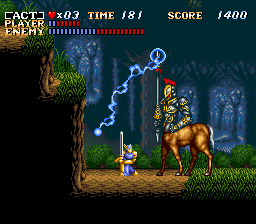
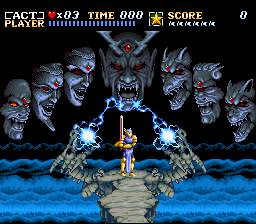
In Actraiser, you take control of the Master (an amalgamation of a Judeo-Christian and an Olympian god) and his angelic servant. Master has just awakened from his centuries-long slumber following his defeat and ejection by Tanzra, the Evil One, and his demonic Guardians. The world has been apparently laid to waste and is now completely barren. The Master and his angel must now begin their work of restoring the world.

Though I can't name anyone on Quintet's team, one of them is most certainly an auteur in the Kojima sense. Every game these guys touch concern theism, restoring the proper order of the world, and humanity's relationship to the universe. Actraiser is the first of these.

In order to restore the world, you travel to each land in your Sky Palace, and then

1) descend to earth and take control of the statue of a warrior to clean out the monsters,

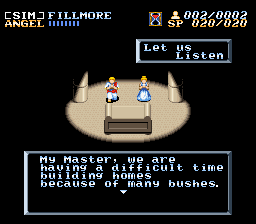
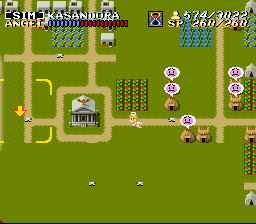
2) help the few people in the land develop their establishment with the assistance of your angelic vassal, then

3) defeat the Guardian tormenting your people.


The action stages are reminiscent of the old Castlevanias, in that you only have one kind of attack and you can't change the direction of your jump in the air. Very hard, but very tight, with a variety of bad guys, and all of the bosses are very scary and appropriately difficult.

As a kid I thought that the development stages were boring, but that's because I was too stupid to understand how they worked. Though they are less dangerous than the action stages, they are nearly as hectic. Between directing your miracles, continuing your peoples' progress and keeping them safe from marauding demons, your angel's a busy little guy.

The main thing Quintet is good at is imbuing a lot of importance into a 16-bit game from the 90s. Since you play as god, everything is treated with reverence. Your angel informs you very eloquently of all the options at your disposal, and apologizes when you attempt to accomplish something you yet have the ability to. Your people grant you offerings which can serve as power-ups, or knowledge like boating or bridge-building that can be shared between lands. And if something goes wrong, they remain understanding and love you anyway.


And because they love you, you really start to feel bad when things get shitty for your people. The people of my desert land, just as they were about to finish their expansion to the shore, were struck by a plague. All development came to a halt as little Jolly Rogers floated above their heads. "What do I DO?" I wondered? I had to wait until I restored the tropical land, when their people offered me medical herbs.

Then, when the people of the tropical land prayed to me that I might link the land of the far island to theirs, I decided to finally use my Earthquake miracle. My earthquake did indeed uncover a once submerged land bridge - and also annihilated all existing houses in the land. How could I have something so destructive at my disposal??

It wasn't until halfway through that I realized that playing this game was just like the episode of Futurama were Bender became a god. It's hard work.

Once you develop all of the lands and defeat all of the Guardians, the island of Death Heim, Tanzra's stronghold, is revealed. Death Heim is a grueling boss rush of all the previous Guardians - plus both of Tanzra's forms - without restorative power-ups. It's an incredibly old school kind of difficult, and it's very rewarding.


Once Tanzra's taken care of, your angel takes you on a tour of the world you've resurrected, highlighting each plight you fixed - the plague you healed, the false idol you struck down, the kid anachronistically named Teddy you saved from monsters.

He then takes you into one of the shrines that dot the land in which people prayed to you and granted offerings throughout the game... only to find it completely empty.


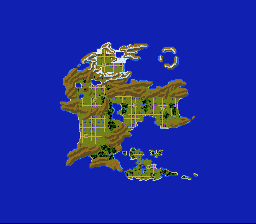
The continents shrink out of view as the Master floats away in his Sky Palace, presumably to slumber again, perhaps this time forever...


(also, for more God-to-man relationships: Illusion of Gaia)

Wednesday, September 22, 2010

Me and my roommates play MGS
Metal Gear Solid 2: Sons of Liberty

Metal Gear Solid is pretty well-balanced. I can't say that it's perfect, but it's REALLY good.

Some boss battles are a test of sheer endurance (Cyber Ninja, the entire end of the game), while others are more like puzzles (Psyhco Mantis). The nice thing is that most challenges require both a perceptive mind to observe the enemy's behavior and mad skillz to neutralize them.

Despite having such high stakes and such good voice acting, the characters never forget that they're in a video game. President Baker tells you to look at the back of the Metal Gear Solid CD case to find Meryl's Codec frequency. Naomi tells you to put the Dual Shock controller on your arm so the game can pretend to massage you with the vibrate function. The Colonel comes up with the brilliant idea of plugging the controller into the second player port to escape Psycho Mantis' mind reading.

Oddly, all of these references to the artifice of the world never takes us out of the moment. We all appreciated the game's honesty, and I much prefer it to the faceless text-driven tutorials in other video games. The sense of urgency might actually be heightened exactly because the player's role in the story as its operator is integral to helping Snake progress - the only one who can press the Circle button fast enough to resist Ocelot's torture is the only character who has thumbs: the player.


Things of note that happened between Metal Gear Solid and Metal Gear Solid 2.

The World Trade Center was attacked.
Kojima produced Zone of the Enders
Kojima watched The Matrix, and probably a bunch of other movies.

Joe and I played MGS1.
Joe and Chelsea played MGS2.

Sons of Liberty is more full of things.

Snake can do more things. He can aim at specific body parts and things, he can sidle up to walls and shoot around corners, he can KO enemy guards and stuff them into lockers. There's more to do, and there are more expectations. We saw the game over screen many times.

The cut scenes are longer. The character models are more detailed, so time is actually spent on the expressions. Time is spent on looking at a LOT of things, actually.

MGS2 is so much longer than MGS1. Playing it, we all remembered that Fatman was the first boss encounter. What we didn't remember was the encounter with Fortune, and that you accidentally "kill" Vamp before that boss fight. We all remembered the bomb disposal mission, but we forgot how long it took.

The difficulty threw some of us for a loop. Me, I remember MGS2 being really hard. Being able to go into first-person view and aim at any part of any enemy from afar - introducing fatal headshots to the series - opened up a lot of strategies. In response, the enemies get much more ruthless. For us, being caught is tantamount to a game over, unless you want to hide in a corner for three minutes and wait, which none of use ever wanted to do.

I also don't remember the fight against Fatman taking so damn long. It doesn't even really make any sense. The idea is that, while fighting him, you have to disarm bombs which he plants, and you can't hurt him through his bomb suit, so you have to shoot him in the head - he takes something like a dozen shots to the head to die. It's just frustrating.

Most of the challenges in the first game were do-or-die. You had to find the best strategy to quickly and efficiently take care of bad guys before they killed you. There was always weight. In MGS2 everything feels like an endurance test. The difficulty feels half-assed.

To take the fight with Fatman as an example. When he has very little health left he stops planting bombs, which means he stops coming to a halt. Instead he just zips around on his rollerblades. He takes shots at you, sure, but they don't even hurt much, not enough to Game Over you. But the only way to get a head shot on him is to go into first-person mode which makes you stand in place, which isn't very helpful when shooting a target that is constantly changing direction and distance. Otherwise he just rolls around, wasting your time. It's not punishing, it's annoying.

Mr. X shows up and throws a lot of objectives on you. You have to use a directional microphone to identify the hostage with the pacemaker, but to GET to the hostages you have to dress as an enemy soldier, which means you need to carry the same kind of artillery as well. And this is before you even get to the part of the Big Shell in which you need to apply this information. I forgot how much time you spend running around the same areas of the Shell at the start of the game. MGS1 only has one mission that requires backtracking... Maybe two.

While walking to strut F to get the M9, a Cypher came in from nowhere and spotted us - it just floated in without warning and was like, "Oh, you're in alert mode now." We fled to strut F were we just laid down the controller and let the massive attack team waiting for Raiden fill him with bullets. It was easier to just have the game kill us and send us back to the time we entered the room, safe and stealthy. The risk is not worth the reward.

MGS2 is DEFINITELY a game in transition. I don't believe they yet knew how to balance the difficulty - or the fun (like sitting in a locker and waiting for the CAUTION gauge to empty) - to match all of the new actions you could perform.

It's once you find Ames that the game unfolds and the pace picks up. Raiden's life is directly threatened, Ocelot steps up and the Ninja jumps in. MGS2 starts shining as a sequel. It makes me wonder if Kojima was even paying attention during the entire Fatman chapter.

Now we have to get to Shell 2 to find the President. Which means we have to disarm the explosives on the bridge by shooting their triggers. Which means we have to go BACK to Strut F to get a sniper rifle. Jesus, the game DOES NOT want us to move ahead. We've been on Shell 1 for eight years.

Though this is definitely where things start getting crazy. Solidus officially introduces himself to us, and Vamp, having already died once, comes in with a Harrier, which Solidus JUMPS onto. It's also the first incident of Raiden one-uping Solid Snake in terms of heroism - a jet is certainly a more impressive take-down than a helicopter. Also, "Pliskin" hovers around in his helicopter throwing you rations and ammo through out the fight. It's the first time he and Raiden team up, and it's pretty great - the first step in the passing of the hero baton. I guess it wouldn't have been so effective if they hadn't been through so much together. In that way, the whole Fatman fiasco serves a purpose. I wish there was some other alternative, though.

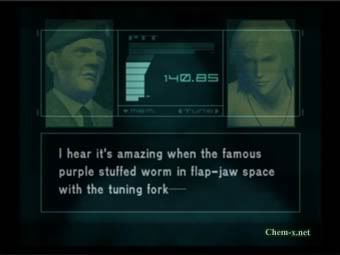
Also: ridiculous and amazing that characters switch to Codec communication to keep others from eavesdropping on them. It's as though the Codec screen is totally separate from the rest of the game's reality.


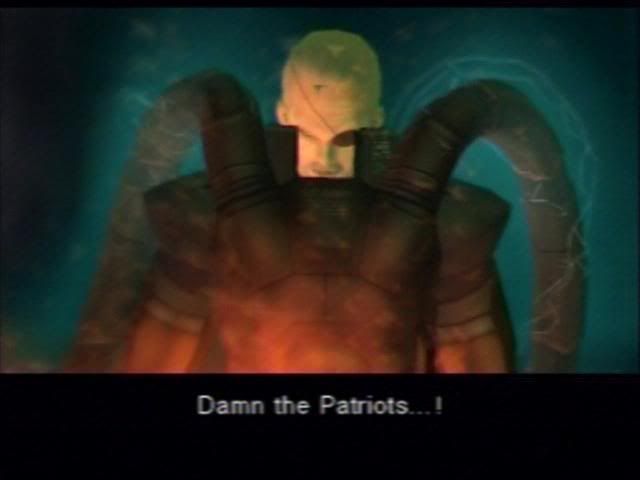
Once E.E. dies, all bets are off. The game officially goes into crazy-awesome mode. Snake and Otacon have a manly handshake, a parrot makes us feel sad, and everything we've done is a lie.

Y'know, when you break it down, by virtue of the Solid Snake Simulation, MGS2 is just like MGS1. There's a serious problem with real world implications - plus a bunch of voodoo. The only difference is that MGS2 amps up the crazy.

It's a fucking riotous success as an exploration of vidjer gams and the future of the digital age. The trade-off? Up until the end, it's not very fun.

I'm watching the ending right now. There's more to say, but I'm not the one to say it. Just read Dreaming in an empty room.


... Though what DOES Kojima feel about women?

Monday, September 13, 2010

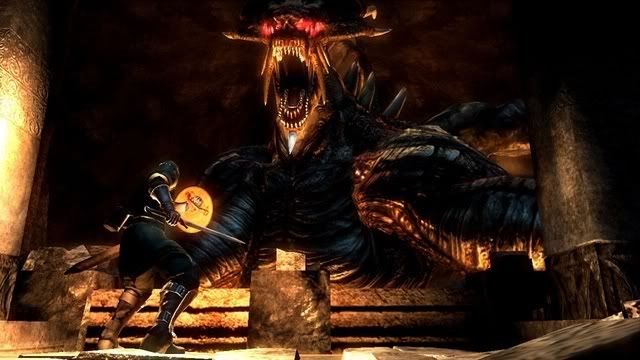
Let me tell you about Demon's Souls


[from Reddit]

Demon’s Souls is a game that will make you into a man. A scrawny fourteen-year-old, after two hours with this game, will be grooming his muttonchops and ready to ship off on the next boat to fight the Kaiser. If you are already a man, it will make you into some sort of bizarre double-man. What’s that you say? You’re a woman? You don’t want to be a man? Too bad. Too bad. That’s the Demon’s Souls way.

You’ve probably heard that Demon’s Souls is hard. Pshh. Lots of games are hard. Some are even harder than this one. The difficulty is not the point. What sets Demon's Souls apart is the way that it doesn't just kill you, but also stomps on your genitals when you’re down. And it will make you realize that that’s what you needed all along.

It’s a lot like life. Sometimes in life you win, and sometimes the giant armored skeleton stabs your face off because the flying mantis monster you didn’t even see shot you in the back with a spike at just the wrong time. And when that happens in life, do you respawn at the same spot and carry on like nothing happened? NO, asshole. You go back to the beginning of the level, leaving all your hard-earned souls out there on the pavement, and you fight your way back. And you learn a lesson from the whole thing, because you should have been wearing your Thief’s Ring, now shouldn’t you? That’s life.

The trend in hard games these days is to unlock “Easy” mode for you once you’ve died enough times. Do you think Demon’s Souls does that? Do you think Demon’s Souls is so much as aware of the concept of “Easy” mode? NO IT IS NOT. If Demon’s Souls even knew we were talking about “Easy” mode, it would come over here and kick the shit out of all of us. And we would deserve it.

I’ll tell you what happens in Demon’s Souls when you die. You come back as a ghost with your health capped at half. And when you keep on dying, the alignment of the world turns black and the enemies get harder. That’s right, when you fail in this game, it gets harder. Why? Because Fuck you is why.

Have I told you about the online elements? At any time when you’re in Body form, another player from anywhere else in the world can invade your game and murder you to regain his own body, or just to keep you on your toes. This happens when you’re in the middle of fighting armies of unthinkable monsters that are probably already three-quarters of the way towards killing you. And no, you cannot opt out of this feature! This is what you signed up for when you agreed to be a man.

When this happened to me -- when a guy strolled into my game like it was Taco Bell and exploded my torso, costing me my body and all my progress in the level -- was I mad? No, because I was too busy being in awe at how fucking hardcore the experience was.

Now, don’t let this dissuade you. Demon’s Souls is a pitiless master, but let it never be said that it is not fair. The game rewards handsomely those who stand up to it, and the greater the challenge, the greater the glory.

What the hell are you waiting for?

Wednesday, March 24, 2010

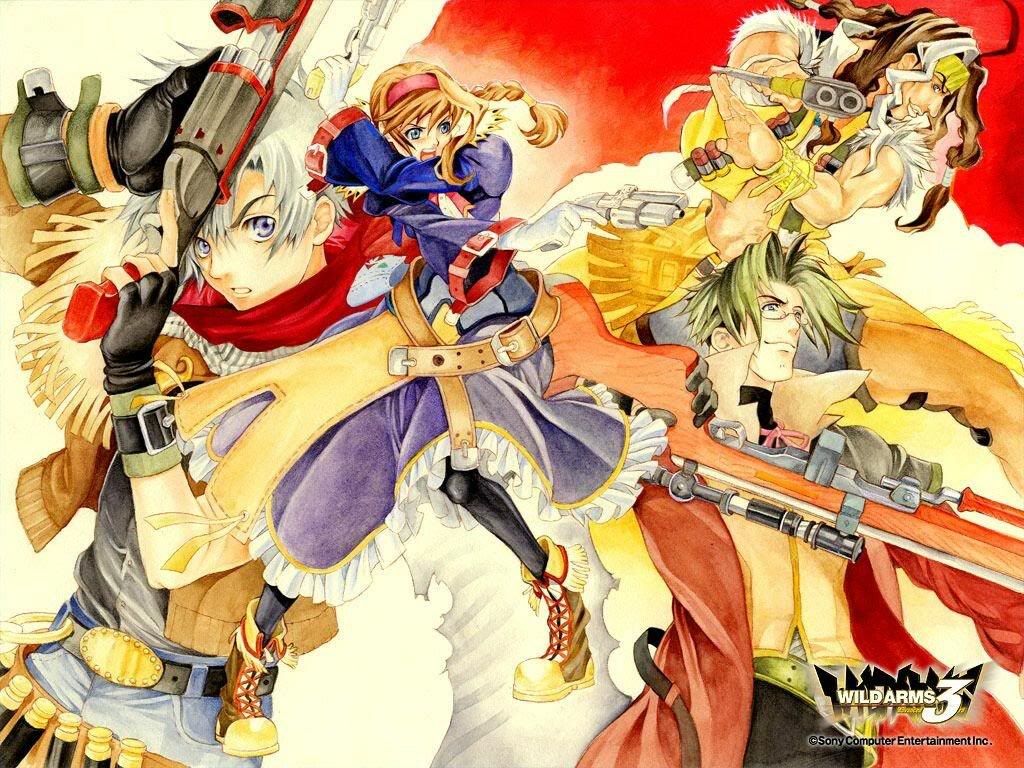
Wild ARMS Advanced 3rd
(I was tempted to write "Advanced Turd")

"It was a dark and stormy night."

At first I thought it was bold of Wild ARMS 3, a 2002 JRPG developed by Media Vision
for the PS2, to begin its story with such a cliched first line. Now I'm worried that this
might be horseshit, because 1) I doubt that Media Vision's translators understood that
they were even committing such a faux pas based on the dry writing of the rest of their
script, and 2) it's not even raining in the damn game.

Anyway, the text eventually fades away. Zoom in on a train chugging through a barren
wasteland in the dead of night. Our heroine, Virgina, is stirred awake by some sort of
commotion in the adjacent car. When she goes to investigate the precious cargo therein,
three mysterious Drifters jump into view from behind a crate, the opposite door and
through the window. Immediately all four of them pull their guns on each other.

Freeze frame. The player then chooses which character to play as.


For those who got Western blue balls from the first two games of the series, this sequence
was very encouraging. It seemed that the development team had finally watched at least
one movie set in the Old West. They didn't have to rely on their usually brilliant sound
composer Michiko Naruke to cop melodies from Ennio Morricone in order to fill in for
all of the Western motifs they had forgotten to insert. They understood that outlaws
wielded guns and not swords or magic wands and that people traveled great distances
via railroad and not by foot on a World Map screen. Even magic spells are now explained
as an extension of native mysticism rather than by the rites of nuns or vampires.

When you select one of the characters, you're treated to a playable flashback of how he or
she came to be on the train. The point of this prologue is to introduce you to the
mechanics of the game by having you play through four snappy little dungeons, one for
each character, each one very different from the other.

The one positive thing I can say about every Wild ARMS game, as far as I remember, is
that they all had fairly well-designed dungeons. Rather than just being a long series of
hallways to walk through while you fight monsters or fall asleep, most of the dungeons
in Wild ARMS 3 actually have puzzles to solve, traps to evade, you know, things for you
to do
. The interesting thing is that some of the puzzles can only by solved through the
use of magical tools only in the possession of your party. It's the moments when you
solve these puzzles, when a door opens because you put out a torch with your snowman
plush-doll that shoots freezing laser beams, when you believe that you are the first to
plunge the depths of these ruins not just because you are so smart but because they
were waiting for you.


At the end of each prologue dungeon is a boss. Each boss has some sort of trick up
its sleeve - some can heal themselves, one is highly evasive and one can multiply itself.
The only way to overcome these trials is by taking advantage of each character's talent,
usable with enough FORCE POINTS, a gauge that builds up whenever damage is dealt,
received or evaded, kind of like the power gauge in a fighting game. A healing foe can
be dealt with by using Accelerator, which allows Jet to act before all others. An evasive
foe can be felled with Lock-On, which allows Clive to deal 100% un-dodgable damage.
Multiple foes can be eliminated all at once with Extension, which allows Gallows to
target all enemies at once. All of these battles set up the expectation that future fights
will have to be won with the utilization of these techniques and not just with brute
force alone.

Back in the present, the precious cargo that was supposed to be in the chest in the
freight car is revealed to have been stolen by a trio of drifters who have fled to the roof.
Our four heroes go after them and have a little boss fight atop the speeding train.
They retrieve the priceless ARK SCEPTER and Gallows convinces everyone to help
him return it to his hometown, the village of the Baskar People.

It's there that they all get mystic powers and are saddled with a destiny that says that
they will - probably - have to save the world from an encroaching evil.

Huh? So we've gone straight from a handful of character who all had their different
personal reasons for heading out into the wasteland to a single unit that only has the
word of one NPC to believe that they have a good reason for going anywhere together?

Let's take a look at these guys: Jet (white hair) is a brooding amnesiac. Clive (with the bill)
is such a clinical observer that he's not that cool, despite carrying a huge rifle and looking
like Citan Uzuki, the most badass family man in any video game. Virginia (flower holsters)
is such a naive Pollyanna. Gallows (curry rice and tempura) is a lush who ditches his
family and runs away from his duties as a priest-in-training. Gallows is the most
sympathetic character because he actually behaves like a real human being.


The game would have us believe that these guys' sticking together is what we should
want because that's what our purported protagonist Virginia seems to want. It would
have been interesting to have seen Virginia's need for traveling companions extending
from her fear of being alone, a fear possibly originating from her mother dying and
her father leaving her when she was young. Instead, she just says that it's the right
thing to do.

Clive and Gallows sympathize with her viewpoint rather easily, but Jet the Amnesiac
Loner says that he'd rather split and not be held back by a bunch of wannabe drifters.
Virginia shows some cajones when she finally shoves Jet's "I'm a loner who works
alone" bullshit right back in his face when she asks him to name a single thing he's
ever done on his own that was worthwhile.

See, that's part of the problem, though. If I were to believe Jet as a misanthrope, he'd
say, "Well, fuck you," and leave the party right then. As ensembles go, the cast of Wild
ARMS 3 doesn't have much chemistry. The only thing keeping these characters
together, and the only reason the kid is in charge, really, is because the story would
end otherwise.

The cast of a JRPG is a funny thing. First you've got to put all the characters into a
situation where they HAVE to work together, and then you have to develop them until
they believably WANT to work together. Wild ARMS 3 shoots itself right in the foot
with its fancy new six-shooter by having the characters admit, before their objective is
even defined, that they have no reason to travel together.

This coalescence of playable characters is much different from the cast of the unfairly
maligned Wild ARMS 4, in which our young hero liberates a girl from the hands of an
evil empire with the help of her would-be captor, all of whom implore the help of an
older and stronger drifter in evading their pursuers. From the start all of our
protagonists are united by their opposition to the antagonists, forgoing the old JRPG
trope of never revealing the villain until the second or even third act of the game in
favor of a more defined, believable story.

Until Wild ARMS 4, though, Media Vision was perfectly comfortable having their heroes
putter around the wasteland, reluctantly agreeing to find meaningless treasure based on
vague clues from townsfolk.

I was about to describe the townsfolk as "faceless" until I realized that, actually, Wild
ARMS 3 might be one of the few RPGs in which every NPC has a name and a character
portrait. Considering everything else the team missed, it's funny to see such detail.

I'd also like to take this moment to explain something I NEVER noticed the first time I
played this game was what happens when you choose to discontinue your game after
saving, because I always just turned it off. You're treated to a little song set to character
illustrations and your party's stats, including total play time, number of saves, etc. It's
like the credits and the end of a TV episode. Between this and the opening animation
that changes depending on how far into the game you are, it seems like it was trying to
be an anime.

It's so weird to see so many little good ideas in this game. Dungeons are still a delight to
explore and every once in a while there's a boss battle that is just difficult enough to
allow the combat system to unfold its mechanics like a blossoming flower. But frankly,
a stronger narrative would've held all of the parts together.

We'll see how much farther I care to go in this game.

Tuesday, March 02, 2010

Heavy Rain is a pretty good apology for Indigo Prophecy

GAMEPLAY NITPICKS

In the scene in the park, Ethan can play with Shaun in several ways at the playground - on the see-saw, the swings and the merry-go-round. After playing with everything in view, the game gave us the prompt to LEAVE, but we still wanted to take Shaun on the carousel. When we took Ethan over to the carousel, there was no prompt to interact with it. Why would there be a carousel if we couldn't do anything with it? We walked all around it, we went to the man at the booth, but still the game would not let us take Shaun on the carousel. So finally we gave up and pressed X to leave.

Sure enough, what does Shaun say when we're about to leave? "I wanna go on the carousel!"

Listen, David Cage. I get that you have a story to tell, but you can give me some damn leeway. I shouldn't have to wait for the game to tell me to do something if I already had the idea myself. This is especially confusing when there are several other points in the game where leaving an area means never returning to it again.


When Jayden is waiting in the police department to speak with the police chief, the game lets you control Jayden while he is waiting - you basically get to decide how he's going to pass the time. You can cross and uncross your legs, recline, and even play virtual wall ball with yourself - and if you do, a slack-jawed cop looks at you in befuddlement, one of the few attempts at humor in the game.

However, moments later, when Ethan is confronted by his wife about Shaun's disappearance, she spends the next minute blaming him and whining, and, as Ethan, you don't get to do ANYTHING - you can't calm her down or explain yourself or even say a word. This was incredibly frustrating to me. How is that you're allowed to cross and uncross your legs, but you can't converse with your wife over the crux of the game's conflict?! There are a lot of moments like this were Cage seemingly forgets to allow the player liberty at a point which would greatly benefit from exploration.


PRODUCTION NITPICKS

In Heavy Rain, we are treated to a flashback of a particular character as child. While the adult version of this character had no peculiar mode of speech, this child has an accent as thick as a croquembouche.

Promotional material for Heavy Rain boasted that it had a "Film Quality Narrative" and "Hollywood Production Values". Quantic Dream, seemingly ashamed of their own business, desires to brand itself, not as a video game, but a Very Serious Movie, or something like one.

If David Cage wants to make a movie, there is some advice I would like to give him:

Many Hollywood movies begin production with an attached creative staff, like a big actor who will play the lead. This actor and others will go where the movie goes and be available on location for all the days of shooting which they are needed. However, some movies require a great many amount of actors to portray various supporting characters, and producers are often busy with many other facets of the film to focus on this process. That is why, when filming in a particular location, they hire casting agents in the area.

The job of the casting agent is to cast actors who can:
  • act well
  • believably portray a character from the place in which the film is set
Even if a movie were NOT to shoot on location, the producers might contact a casting agency from the place in which the movie is set so that they might be able to cast actors from that area.

It is my belief that no one at Quantic Dream actually knew that casting agents where a type of people that existed. Had they known, they could have called an agency from Philadelphia to help them fill out their cast, so that Heavy Rain might actually seem like it takes place there as opposed to some alternate-dimension Brussels like I had at first assumed.

I will listen to defense of all of Heavy Rains' hiccups in presentation and interaction, but there is no excuse for the poor casting. I'm sure that many of these actors would prove to be quite talented in their native language, but they all could have been replaced by equally talented actors whose native language is English. There are a countless number of good American actors desperate for work, and for a project with such a sizable budget - a project built around a gripping drama driven by actions performed by believable characters - such a gross lack of effort in seeking these actors out is inexcusable.


As has been mentioned by many others, the actor who portrays Private Investigator Scott Shelby is by-and-far the best actor in the game. However, it is when those actors who are less stellar than he are speaking that the awkwardness of the writing is readily apparent. A great actor can find meaning in the dumbest lines, but a bad script cannot hide the silliness of its dialog forever. This is especially true in lines delivered by women or children.

Madison: "You go, girl!"

Jason: "Please dad, can I have one? I'd really love to have one!"

It's funny that children are such an integral part of Heavy Rain's story considering Cage has no idea how to distinct between the behavior of an actual child and a directionless, warbling idiot.


There are a few crowd scenes in Heavy Rain, times where you have to make your way through a large group of people. You may not notice, but very few - I would say approximately none - of these people are black.

At first I was relieved. The last black character David Cage had written into a game was Tyler from Indigo Prophecy, who was pretty much a basketball-playing, Motown-listening stereotype (however, much like Cole Train from Gears of War, his stereotypcial traits made him the one character in the game with the most personality). I thought that maybe Cage had come to terms with the fact that he obviously has never met a black person in his life and decided to give up on pretending he could write a black character.

But then Mad Jack was introduced, a huge, bald, tattooed, dim, big-lipped, sadistic ex-con who works in a junkyard. At first I was taken aback. But then I thought, "Okay, okay. So he's a violent brute, and he HAPPENS to be black. Maybe these things happen?"

Then, a couple of scenes later, while some characters are pondering the identity of person whom they only know as a name on a gravestone, out comes the groundskeeper of the graveyard - an elderly black gentleman, leaning on a shovel, who just happens to know the deceased because he's worked in this graveyard all his life. He then proceeds to tell the story of the deceased, which unfolds in a playable flashback. God bless you, Menial Labor Exposition Negro!

Also, Paco Mendes, the only Hispanic character I can recall, is a sleazy, womanizing, drug-dealing nightclub owner.

The funny thing about these these characters is that their voice actors are all quite competent, despite the fact that many of the supporting roles in the game are portrayed by actors who are much weaker or entirely miscast. This suggests several possibilities:
  • Cage emphasized the importance of casting good actors to effectively portray his racist stereotypes over most of the other supporting roles in the game.
  • Cage sees no difference between white people from Europe and white people from the United States and felt free to have them cast interchangeably.
Either way, it's difficult to assume that Cage is not racist.


Heavy Rain is not a bad game. But, pretty and engaging as it is, it's not the bastion of progressive video game storytelling. In fact, just last year, Silent Hill: Shattered Memories featured a variable narrative presented with a fraction of the budget and processing power available to Quantic Dream. I suppose the main difference between Shattered Memories and the "Hollywood-quality" Heavy Rain is that one has good actors and good writing.


Wednesday, January 13, 2010

Desktop Cleanup: Speed Racer

It seems like the main reason Speed Racer's dubbing is so laughable is
that Peter Fernandez, the director, wanted to remain as true to the
original script as possible - so every line is translated with such
exactitude that the only reason anyone sounds natural is because of
some truly committed work on the part of the actors - all three of
them.

But sometimes it seems like even in the original Japanese the actors
would have to be speaking as fast as possible in order to get every
line across.

...

The third episode, Challenge of the Masked Racer Part One, starts with
a narrative restraint that wasn't present anywhere in the first
episode. For about a minute, Speed and Trixie enjoy a mostly
dialog-free drive by the waterfront. Then they gasp and use the Mach
5's jump-jacks to avoid running over a wayward puppy.

We're then immediately introduced to the Masked Racer - who we all of
course know as Racer X, who we all of course know is Speed's brother -
as he supervises the transportation of his racecar, the Shooting Star,
from aboard a freighter. It's a very ambitious series of animations,
neglecting the usually dodgy perspectives and proportions the show as
a whole tends to suffer from.

Racer X is surrounded be mealy-mouthed and kind of hilarious reporters
seeking to grill the Masked Racer on his recent implications in
accidents during various races. As these ugly, fast-talking schmucks
squabble about, the Masked Racer calmly sees to his car's well-being
and drives away slowly to enough to take a brief, meaningful glance at
Speed and Trixie through his rear-view mirror.

This sequence is striking for two reasons. First, we're introduced to
a character who doesn't immediately challenge our patience and
tolerance by jabbering idiotically the moment he appears on screen.
Second, this is the first real incident of the animators trusting
the subtext of the actions we see to speak for themselves.

Over only two episodes, the visual direction has become more ambitious
and the story has developed a subtle pathos that seemed impossible
given the quality of its premiere.

I mean, before long we're reunited with the same chimp nonsense,
needlessly lengthy looped racing scenes and characters jumping to
impossible conclusions. But that's what makes Speed Racer Speed Racer.

"Meanwhile, in a secret hotel room, the secret head of the Alpha Team,
Mr. Wiley, is holding a secret conference."


Desktop Cleanup: The Big O!

I'm deleting old files in a bid to clean up my computer's desktop.
This includes several text files which I meant to one day be full-fledged
essays. I post them here in case I may ever want to return to these
subjects. Though I likely never will.


The Big O! Serial Storytelling in a Post-Evangelion World

Marketing concept falling by the wayside in favor of the story
-Big O does not go into detail explaining the event 40 years prior
-just like Y the Last Man doesn't explain the death of every male
-just like Eva stopped being a monster-of-the-week show for selling toys

The form of the story gives way to the crux of the story
-Big O makes a point of highlighting the roles of the characters,
characters are revealed to be living sham lives
-LOST is built on characters' flashbacks and flashforwards until the
story is literally jumping back and forth in time
-Every character in Eva is depressed as hell, and it is revealed that
the whole point of Instrumentality is to fix those emotions

Between seasons, The Big O creators were given time to think, much the
way that Anno had two years to think about the direction of Eva's
story.

Tuesday, December 15, 2009

Sheep No More - Forging Our Own Way in Boston Theatre

When I went to Emerson College to study performance, I learned that theatre consisted of more than beautiful people singing and jumping and dysfunctional families yelling at each other in cross-sectioned living rooms. In studying the post-modern avant-garde movements, I learned that theatre can be sacred and violent, as real as it is surreal, personally affecting and brimming with meaning in every facet. It doesn't have to be financially gluttonous, or chained to tradition. It is alive, and it can grow and change and cast aside those tenets which are no longer useful.

Of course, school and the real world are very different places. In school, actors have the space to expand their horizons. In school, actors are always busy.

I wouldn't say I'm naive. As an actor, I don't expect deluges of fantastic roles all of the time. But as a theatre enthusiast, I demand to see progressive work.

I know I can't expect all theatre artists to produce naked transvestite versions of the Old Testament, or to sell tickets for the privilege of walking over a foot bridge while a man watches from beneath and masturbates, but, damn, I was hoping I'd at least be able to find more challenging scripts on stage.

I know that there are wonderful parlor dramas. Some of my favorite theatre experiences were just people talking honestly to each other about real concerns. However, these realistic depictions of life can't be confused for the foundation of theatrical work, because it's not. If anything, the avant garde examples I described are more closely linked to the classical and proto-classical, communally significant rituals that spawned what we now consider to be theatre.

I know that the 70s were ridiculous, but I thought there were some important lessons in there! What happened; did all those artists grow up and say, "Boy, that was silly, and I've had quite enough of it"?

Yeah, it was silly. Yeah, it was ridiculous and unlike anything anyone had seen before. That's what makes it worth remembering! It's always been hard to make people accept progressive work, but even the most popular mediums like film and television, I feel, seem to have a wider spectrum of topics and trends than theatre manages. I think there's room for that kind of work along with the stuff we're usually doing.

But no one is willing to take the plunge. Financial leaders in the world of Boston theatre don't see a reason to fix what isn't broken. Theatrical events, unlike movies, do not have trailers. This make it harder to guess what you're getting out of your money, and that makes the investment riskier for both producers and audience alike. No one wants to put up something weird and new if it means running the chance of alienating their core audience - which in 80% of all instances is senior citizens. Thinking about it now, I suppose that's a normal fear, like telling a girl that you like her: will she still want to be friends after that?

Some companies have noticed the shortsightedness of this approach, though. It's difficult to ignore the fact that the elderly in whom they invest so much will be dead within a few decades. And then all you'll have left are the young theatre professionals who can barely even afford to see a play on a regular basis.

Marketing strategies have been altered to target those bright-eyed youths (anyone under 40). Snarky taglines, hip and minimalistic posters, the Facebooks, the Twitters, the whole shebang. So how come it isn't working?

The shocking answer is revealed by this guy named Isaac Butler. According to Butler, the secret to attracting a younger audience is to 1) produce something they'd want to see, 2) produce it well, and 3) offer it at a reasonable price.

"Theater companies and producers for the most part do not want to do the above three things. What they want to do is do the same work and use marketing to trick younger audiences into thinking it's what they want to see."

Unfortunately for those producers, those younger audiences are smarter than they get credit for. The problem that companies are having are either that they simply don't know how to appeal to these audiences on an honest basis, or that they never cared about younger people to begin with - just their money.

[I'm sure I'm writing about a lot of basic topics here, but, please, let me think this through.]

Money makes the world go round, sure. Community outreach, especially the kind involving donations, is the cornerstone of theatre. For all I know, possibly the only reason there's still theatre in Boston is because of the amount of wealthy elderly living here.

So it's not just about ticket sales. Those who can afford to make donations help the company, and in return the company analyzes the demographic of their donors and puts up a play that would make them want to donate more.

How many young people do you know who can afford to make a donation to a company between rent payments? I have many friends who love theatre with as much intensity as anything, but not one of them has a subscription to any local company's season. Producers think they have nothing to give, and thusly say: "They're worthless; forget about them!"

But they would be wrong again! For there is one thing that young post-graduates can provide to a company that some older audiences cannot or will not; something which, in fact, they done very much of and have not yet gotten out of the habit of doing.

Volunteering!

It was my peer and fellow actor Scarlett Redmond who first told me about volunteer opportunities for Sleep No More. Even hearing her description of the production as a fusion of Macbeth and Hitchcock in a vacant school, I had a difficult time imagining it as something other than a haunted house with the ghosts of Laurence Olivier and Robert Donat wandering about.

Even after volunteering my ideas weren't terribly more concrete, but after stuffing headless plastic baby-shaped forms with sticks and paper for two hours, I knew I would have to come back and discover just what the importance of my work was in the greater scheme of the production.

I found that Sleep No More is what I've been waiting for, and it proves that my education was not a waste.


Designer Amanda Cameron and several others along with myself put on a performance just prior to which the performers, including Amanda and myself, dispersed ourselves amid the audience members. Only one professionally-dressed performer, Jim Sligh, opened the doors to the space and admitted everyone and bid them to be seated. He handed out newspapers in which different specific commands were given to the reader, which they were to act out based on particular sound cues from Oh the Places You'll Go, read aloud by Amanda (as stipulated in her newspaper). For about the next five minutes, various members of the audience jumped, took off their shoes, sought after certain objects that did not actually exist, applauded and lead around another blindfolded audience member who then recited the Pledge of Allegiance, during which all other audience members hit the deck and covered their ears exactly as they were commanded, among other things. And I was stripped to the waist, bound, gagged and dragged on stage to writhe in pain at the sound of applause. No one knew who was in on it until it was over.

What we did and what Punchdrunk has done is a very old school idea. In crossing the border between performer and audience, a single group is created, all of whom are creating and living in an experience. The audience stops being the audience and starts being creators - sometimes, in terms of volunteerism, quite literally so.

This is the one way in which theatre can always overcome the cheap and instant gratification of TV, film and streaming video - rather than a series of events to look at, you can make a world to inhabit.

And it's a strange and wonderful world indeed. Sleep No More's space is full of so many different, curiosity-piquing sights - "What does it mean?" you constantly ask yourself. The amazing thing about the show is that there is a headquarters of sorts, the Manderley bar, where you can ease your feet, take off your mask and ask the person next to you, "What was up with that room with the single stuffed fawn?"

I realized just now that I can talk about Sleep No More without end, but it's very difficult to write all those thoughts and keep it coherent. I guess the main thing I've learned is that there is at least one company that reflects the aesthetic inclinations of artists and non-artists my age with pomp and elegance, and their success should be a lesson to everyone.

Now I'm gonna talk about all of the video games that Sleep No More is similar to. Imagine my surprise when I found out that A.R.T. artistic director Diane Paulus described it as "art installation meets living video game", because that is exactly what I thought.

---------
Notes:

THESIS: Old people are ruining things for everyone, so they can fuck off and die.
ACTUAL THESIS: Old tendencies are hindering theatrical progress in Boston, and it's up to those in the spotlight to make the first move.

-What I was taught theatre was capable of (bare, ritualistic, violent)
--What I thought I could bring to it (daring scripts, simple and human storytelling)
-What theatre in Boston actually is (imports from NY, the same "classics")
--A mobius strip of self-defeat (http://theatregreaterboston.files.wordpress.com/2009/09/theatre-in-greater-boston.pdf)
---Like Emerson itself, too clique-y for its own good

-Outreach: how do people even end up going to theatre?
-Theatre vs Film
--Film has trailers. Plays don't. The investment is riskier
---Film doesn't do the same fucking classics over and over
-Asking the community to help
--Typical Boston theatre's outreach to the elderly (money)
--Punchdrunk's outreach to the young (volunteering)

-SLEEP NO MORE is...
--everything I'd hoped for
---a personal connection, as a theatre student (performer to performer)
----as an avant-garde performer (I've DONE this shit before, I can't believe it's actually viable!)
----as someone who wants to make bold, moving pieces
---freeform
----independent discovery
----open to interpretation
----encourages discussion amongst patrons (online, piano bar): THEATRE IS FUCKING COMMUNAL

-Criticism from old people
--"too open"
--("In the interest of attracting a younger crowd we should not succumb to today's popular formula of empty sophisticated forms, with food and drinks.")
---Sleep No More doesn't come close to being as vacant and grubbing (merchandise, subscription offers) as popular theatre
--Valid criticism
---"If the ART is to survive, it needs to reach out to the younger generation, so I am in no way suggesting that the problems noted above should affect the approach of the new management, but I wonder if it might make sense to have a couple of old folks performances of Sleep No More with a more limited attendance and a little more attention to enriching the artistic experience of those who are no longer as fast as they used to be."
---The old and the young

Monday, December 14, 2009

Wednesday, December 09, 2009

Another Bad Night


This Saturday night at 7:30, my theatre company, Rough Week - which I have just introduced to you RIGHT NOW FOR THE FIRST TIME - will be producing five short plays by playwright, friend and founder of The International Brain Transplant Committee, Jeff Belanger!

These are the funniest and most surprisingly thoughtful plays I've ever had the pleasure of working on, and you can see them for the low, low price of FIVE DOLLARS, or the low, lower price of THREE DOLLARS if you're a student, or the low, lowest price of TWO DOLLARS if you're an Emerson College student! Add snacks and merriment on top of that, and you've got a night of theatre that can't be topped!!

Located at United South End Settlements at 566 Columbus Ave. at the corner of Massachusetts Ave., it's two blocks from Symphony station on the Green Line and a mere one block from Massachusetts Ave. station on the Orange Line!

Witness the birth of a bright new star in the sky of Boston theatre! ANOTHER BAD NIGHT!

Reserve tickets at roughweekproductions@gmail.com.
Or check out the Facebook page!

Thursday, December 03, 2009

It's December, and it's been a year since last December

I had a dream where my roommate Conor and I were waiting on a couch in a well-kept suburban living room for our host to arrive.

A cat entered the room. It had the head of a woman who was gracefully entering her middle-age. She cleaned herself with her tongue, hopped up on an ottoman on the far side of the room, smiled demurely, hopped down and left through the same doorway.

Conor and I were okay with this.

Friday, November 27, 2009

This book is the single most important thing in the world

After I liberated Beast's Castle, Sora and gang get pulled back into Hallow Bastion so Merlin can tell them that he found Winnie the Pooh's story book. Sora is pleased as all hell. In fact, as soon as Merlin steps out, he can't jump into the book fast enough to see what Pooh is up to. He is so damn enraptured by Pooh that when the Heartless steal the book through a clever ruse, Sora immediately dispatches them and jumps right back into the book. And then we find out that all of Pooh's friends are missing, because the pages of the book are missing.

15 minutes to set up a sidequest, and I didn't even get to see Sora kiss Winnie the Pooh.

Friday, August 21, 2009

Climb

To dream that you are climbing up something (ladder, rope, etc.),
signifies that you are trying to or you have overcome a great
struggle. It also suggests that your goals are finally within reach.
Climbing also means that you have risen to a level of prominence
within the social or economic sphere.

To dream that you are climbing down a cliff, indicates that you need
to acknowledge and take notice of your unconscious. You are
expressing some hesitance and reservation with delving into your more
negative feelings. Alternatively, it suggests that you may be feeling
low or emotionally drained.

Sunday, July 12, 2009

Hello.

My name is Terry.

I live in the house across the street; 12 Verndale St. #2.

Last night, as I lay in bed, the dog in the apartment to the right of the lobby entrance began barking and howling distressedly. It was 2am.

This continued for some time.

I put on my shoes and came over to investigate.

Of course, I wasn't sure what I should do...

I thought I might alert somebody else in the building to check and see if everything was all right.

I was unable to attain any responses.

This is the first time I've heard this dog howl so - maybe you were dog sitting?

I just want to be sure that everything is all right, with you and the dog.

Take care.

Thursday, June 25, 2009

That Is What the World Calls Love

The night before I graduated from Emerson College, rather than getting some rest for the ceremony in the morning, I started playing Ouendan 2 on hard mode. I got to the last song. I couldn't quite beat it. I tried again and again. I shifted in my seat. I changed the rhythm with which I breathed. I altered my psychological mindset, back and forth, over and over again. I had to try every combination until victory came.

And then I looked out the window. The sun was rising.

Not a sunrise... but a galaxy-rise.


Namida no naka ni kasuka na akari ga tomottara
Kimi no me no mae de atatameteta koto hanasu no sa
Sore demo bokura no koe ga kawaite yuku dake nara
Asa ga kuru made semete dare ka to utaitai n da

Kinou no anata ga nise da to iu nara
Kinou no keshiki wo sute chimau dake da

Atarashii hibi wo tsunagu no wa
Atarashii kimi to boku na no sa
Bokura naze ka tashikame au
Sekai ja sore wo ai to yobundaze

Kokoro no koe wo tsunagu no ga
Korehodo kowai mono da to wa
Kimi to boku ga koe wo awasu
Ima made no kako nante
Nakatta ka no you ni utai dasu n da

Bokura wa izure dare ka wo uta gacchimau kara
Semete ima dake utsukushii uta wo utau no sa
Kanashii kotoba de wa
Nani mo kawaranai n daze
Yatsura ga nani wo shitatte iu n da

Kinou no anata ga uragiri no hito nara
Kinou no keshiki wo wasure chimau dake da

Atarashii hibi wo kaeru no wa
Ijirashii hodo no ai na no sa
Bokura sore wo tashikame au
Sekai ja sore mo ai to yobundaze

Kokoro no koe wo tsunagu no ga
Korehodo kowai mono da to wa
Bokura nazeka koe wo awasu
Ima made no kako nante
Nakatta ka no you ni utai dasu n daze

Ai to heiwa!
Ai to heiwa!
Ai to heiwa!
Kanashimi de hana ga saku mono ka!

Atarashii hibi no bokutachi wa
Takanaru yokan ga shiteru no sa
Kimi to boku ga yume wo sakebu
Sekai wa sore wo matte iru n daze

Anata no tame ni utau no ga
Korehodo kowai mono da to wa
Dakedo bokura tashikame au
Ima made no kako nante
Nakattaka no you ni Oh yeah
Kanashimi no yoru nante
Nakattaka no you ni utai dasu n da ze

Sekai ja sore wo ai to yobun daze!

LOVE & PEACE!
LOVE & PEACE!
LOVE & PEACE!
LOVE & PEACE!
LOVE & PEACE!
LOVE & PEACE!
When a faint glimmer shines in your tears
I'll say something to warm you up, right before your eyes
Even so, until our voices give out
Until dawn breaks, I want to at least sing together with someone

If you say that wasn't the real you yesterday
Then I'll just throw away yesterday's scene!

A new you and me will
Connect these new days
We're somehow sure of it
And that's what the world calls Love!

The thing that connects the voices of our hearts
Is so intense that it's frightening
Your and my voices come together
It's as though we're starting to sing
As though there hadn't been a past until now

We'll someday be suspicious of everyone
So at the very least, I'm going to sing a beautiful song now
Nothing ever changes
When it comes to sad words
"What have they done?" I ask

If you were a traitor yesterday
Then I'm just going to forget about the scenery from yesterday

The thing that will change these new days
Is innocent love
We're sure of it
The world calls that love too

The thing that connects the voices of our hearts
Is so intense it's frightening
Somehow, my voices come together with yours
It's as though we're starting to sing
As though there hadn't been a past until now

Love and peace!
Love and peace!
Love and peace!
A flower will bloom from sadness!

The 'us' of our new days,
They're full of expectation!
You and I cry out our dreams,
And the world is waiting for it!

The thing that I sing for you
Is so intense it's almost frightening!
But we met for a reason,
Like up until this point
There had been no past,
Just like how there had been no sad nights
That how we want to sing!

And that's what the world calls Love!

LOVE & PEACE!
LOVE & PEACE!
LOVE & PEACE!
LOVE & PEACE!
LOVE & PEACE!
LOVE & PEACE!

Thursday, May 28, 2009

Yes, we ARE all trapped in a maze of relationships

I just finished Persona 4, and I should have a lot to say about it considering how much I loved it. But in reality, I've been playing it for so long that I've already professed that love again and again in my head, and articulating those thoughts seems kind of redundant, now.

All I can really say is that Persona 3 and 4 represent the best new ideas to surface in JRPGs in a long time. They are sleek, charming and aesthetically unique. Not only are they set in the real world - a novelty in itself - but they manage to be more thematically resonant to modern life than other franchises.

Something that ATLUS can work on for the next installment, though, is learning how to sustain that greatness over the course of an eighty-hour game. While Persona 4 is technically more refined than 3 in terms of gameplay, I find that 3's story managed to maintain its dramatic weight more evenly in the end.

Now I can finally look at my Persona 4 art book without fear of spoilers.

EDIT: Oh, bullshit.

Apparently there's a True Ending that I didn't unlock.

Well... I guess that's what YouTube is for.

Wednesday, May 13, 2009

Code Gay Ass: Le Douche of the Rebellion

So, hey, I just started watching this anime.

It's about this school boy. He's good-looking and really smart and has a lot of big ideas.


One day he gains the power to manipulate the wills of others from a detached, otherwordly being.


He decides to use this power to right the wrongs of the world around him - so he creates a persona to gain the appeal of the public while hiding his true identity.


And the story is how he tries to connive his way to world peace while maintaining his secret lifestyle and discovering the workings of his power.


Lelouch copped Light Yagami's style because it's a good one. It's still a pretty fresh idea in mainstream anime - the sneaky bastard as both the hero and the villain, at odds with the entire world around him.

So what happens when you take a fresh idea and put it into a genre known for its staleness? The results are pleasantly confusing.

It seems like Code Geass makes a point to reinsert all of the cliches that were missing from Death Note. The otherwordly agent is a bright-eyed girl with flowing green hair and shapely derriere, rather than a creepy demon. The opponents are not a task force of office workers, but an empire with a fleet of giant robots (Knightmare Frames) with silly names German names. Code Geass also makes sure to put in all of the awkward and superfluous classroom scenes that Death Note was so foolish to neglect! I mean, how else are we going to get to see schoolgirls misunderstand each other and get embarrassed about things?

At first glance, the injection of cliches might seem like a step back for the genre. And, well, maybe it is. Code Geass is obviously seeking to fulfill a different need than Death Note. Code Geass is Death Note by way of a Saturday morning cartoon. There is no subtlety. Everything is much more colorful and distinct, and the pacing is swift and consistent. If there is ONE THING I have to praise Geass for, it's for keeping the pace with quick cuts and by constantly developing the action without reusing old frames of animation or relying on talking heads as a means of exposition.

It kind of reminds me of that Spider-Man cartoon that was on Fox Kids - an ACTUAL Saturday morning cartoon. They always managed to cram so much story into very little time. It was often as stupid as it was exciting as a result, and it may have been confusing, but it was rarely boring!

Hey, Lelouch is a lot like Spider-Man. He's got a lot of secrets to keep and people to protect and everyone's out to find out who he is and take him down.

However, cliches can only work for you in so many ways. When I first started watching Geass, I was excited, but wary. I knew that the show could not maintain it's momentum merely through scenes of military robot action. No. I knew, at some point, the action would have to come down and that I would be forced to endure scenes of schoolchildren acting like schoolchildren just like they do all of the time in all anime, with all the schoolgirls' voice actors living in their upper registers and no one sounding at all pleasant or natural. And I knew that I would be introduced to new characters who were stupid and cloying and who, once they were named, would officially become a part of the cast and would not go away.
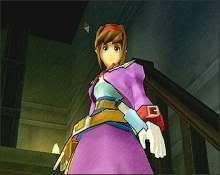
That's one problem with stealing good ideas. If all of the characters are really dumb or uninteresting, it becomes that much more obvious that the one interesting character isn't even original. Besides that, what good is a super-intelligent manipulator if most of the people around him are total dopes?
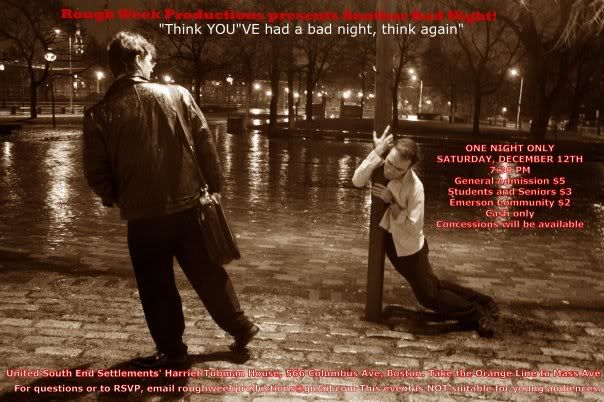
The one time this sort of seen-it-before characterization works out is through Suzaku, Lelouch's childhood friend. He is much different from Light's partner/rival, L, in that he does not fight fire with fire. Rather than using his intellect in the struggle for peace, he relies on virtues typical of the anime hero: instinct, courage, honor and a big robot. In this way, he's actually a perfect foil, highlighting all of our anti-hero's strengths and vices. He's like the Laertes to Lelouch's Hamlet. Or the Ramza to his Delita.


The last anime I spent any great deal of time with was Stand Alone Complex, an incredibly thoughtful and mature if slow-paced series. After I watched it, I thought, "Yes, this is the future of animation."

And then Lelouch walks into my life - tall and skinny and pretty, with his tokusatsu mask in one hand and a stupidly obvious symbol for justified manipulation (a chess piece) - and flashes his Geass at me, and I'm under control. My sudden attraction to this nutty show is so confounding that it seems like something apart from me. At first glance, Geass seemed as though it was everything I stood against, a step BACKWARDS. Then my friends showed me the first episode. Now, after watching only six more episodes, I have been moved to write about it. It pains me to admit it, but that obviously means that it's worth something.

Cliches exist for a reason, right? There's always something bigger beneath them, like the tips of icebergs. Does Geass have what it takes to tap into the strengths of these cliches? Do I have what it takes to see this through?

Lelouch; I accept your contract.

Addendum: 5/23

Go here, and start watching.

www.codegeassepisode.com

Code Geass has successfully combined the heightened theatricality of anime with the sheer dramatic momentum of a primetime blockbuster.

I don't hate it.

Blog Archive

Contributors